
Opinion – Tharini Rouwette, CEO, Allies in Colour
Australia’s new Race Discrimination Commissioner, Giri Sivaraman, has rightly earned praise for calling out how governments too often hide behind vague rhetoric of “social cohesion” rather than tackling racism directly. In his National Press Club address, “There’s nothing casual about racism: Getting serious about racial equality,” he named what many in the community have long felt but few in leadership have dared to say out loud:
“There are some levels of government that don’t even want to use the word ‘racism’. They’d rather use euphemisms like ‘social cohesion’ or something else … It’s not clear what social cohesion means and we just shouldn’t allow it to obscure anti-racism work.”
That clarity matters. For too long, social cohesion has been treated as a policy end in itself – a warm and fuzzy concept that soothes governments and media, but fails to grapple with the structural and interpersonal racism that fragments people’s daily lives. As Sivaraman put it bluntly:
You’ve got to name the beast to slay it. You’ve got to confront the issue.
His willingness to say this at the National Press Club, the country’s most public policy stage, is significant. So too is his emphasis on the Commission’s “Seen and Heard” project, which has gone into Muslim, Arab, and Israeli communities across Australia to listen to lived experiences of racism and discrimination. That project’s insistence on giving vulnerable communities the microphone, rather than just speaking for them, sets an important standard.
And Sivaraman is right that the genocide happening in Gaza has sharpened the urgency of this work. He noted:
The war in Gaza has triggered a terrifying surge of anti-Semitism, anti-Palestinian racism, anti-Arab racism, and Islamophobic hate… Mentioning those different forms of racism doesn’t mean equating them. Mentioning one doesn’t invalidate another
That powerful acknowledgement, that harms are different but interconnected, and that naming one doesn’t erase the others, is a critical step forward. In a climate where communities often feel pitted against each other, this framing can help restore a sense of shared humanity.
Yet there remains a glaring contradiction. When a journalist at the address asked for his opinion on the massive pro-Palestinian protest on the Sydney Harbour Bridge, a landmark demonstration that reverberated globally, the Commissioner was unsurprisingly evasive. For many Palestinian, Arab, and Muslim Australians, and for the many allies who marched with them, that protest was an act of visibility in the face of erasure. To sidestep it sends the opposite message of the Seen and Heard project.
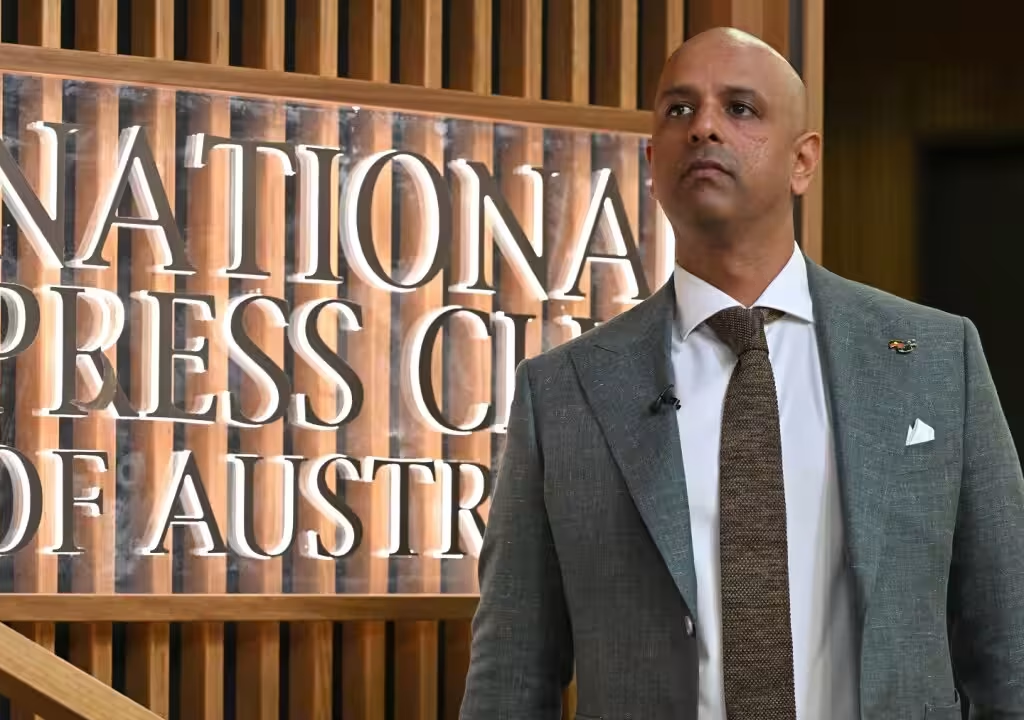
The harder question though, is whether Sivaraman, despite his mandate as Race Discrimination Commissioner, even can speak frankly about the genocide of the Palestinians, without risking his own position. We’ve already seen what happens when public figures refuse to toe the government line. Take the case of Dr Randa Abdel-Fattah, the acclaimed academic whose $870,000 ARC Future Fellowship grant was suspended after her pro-Palestinian advocacy, sparking accusations of political interference in academic freedom. Her case wasn’t just academic; it was political. And it sent a chilling message: those who break the silence risk being shut out entirely.
ARC suspends $870,000 grant to pro-Palestine academic Randa Abdel-Fattah, senators told
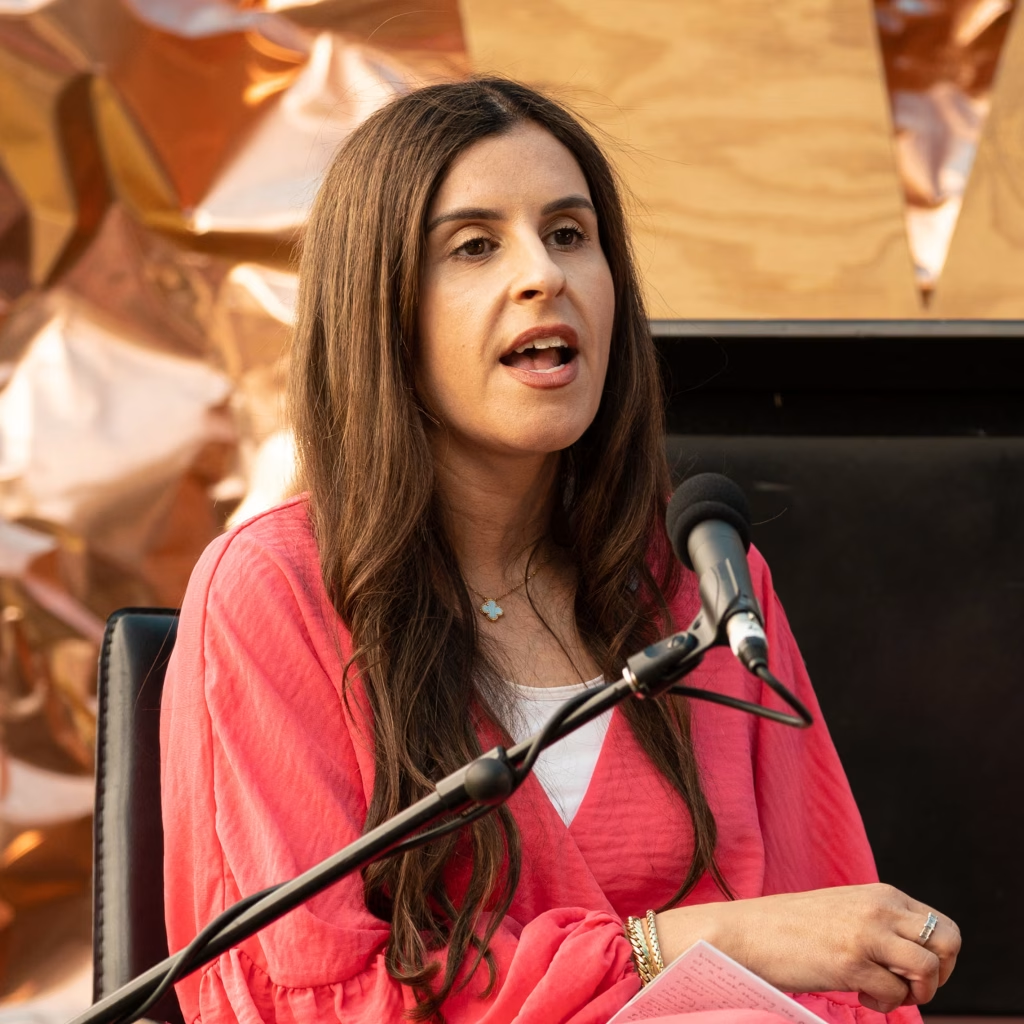
This is the crunch. If even the Commissioner must temper his words to be effective or remain in office, then who will (correctly) name the injustices that our government prefers not to acknowledge?
If social cohesion is to mean anything, it must mean standing with communities in their hardest, most painful moments, not only in the safe or symbolic ones. Silence on the genocide of the Palestinian people, or on any community experiencing various levels of oppression, chips away at the credibility of our anti-racism agenda.
That’s why Sivaraman’s call to implement the National Anti-Racism Framework, released by the AHRC in 2024, is crucial. It contains 63 recommendations, including a 10-year national framework that acknowledges the systemic and structural nature of racism and the historical and ongoing impacts of settler colonisation on First Nations peoples.
Yet nine months on, the federal and state governments have not committed to action. Rather, the government has invested disproportionately in “Special envoys”, an approach which is akin to a cancer patient drinking apple cider vinegar believing it to cure cancer, rather than follow expert medical advice. Recruiting these “special envoys” do not foster social cohesion, Furthermore, we are causing more harm by not adopting the recommendations of the report.
Calls for antisemitism envoy to step down after husband’s trust Advance Australia donation
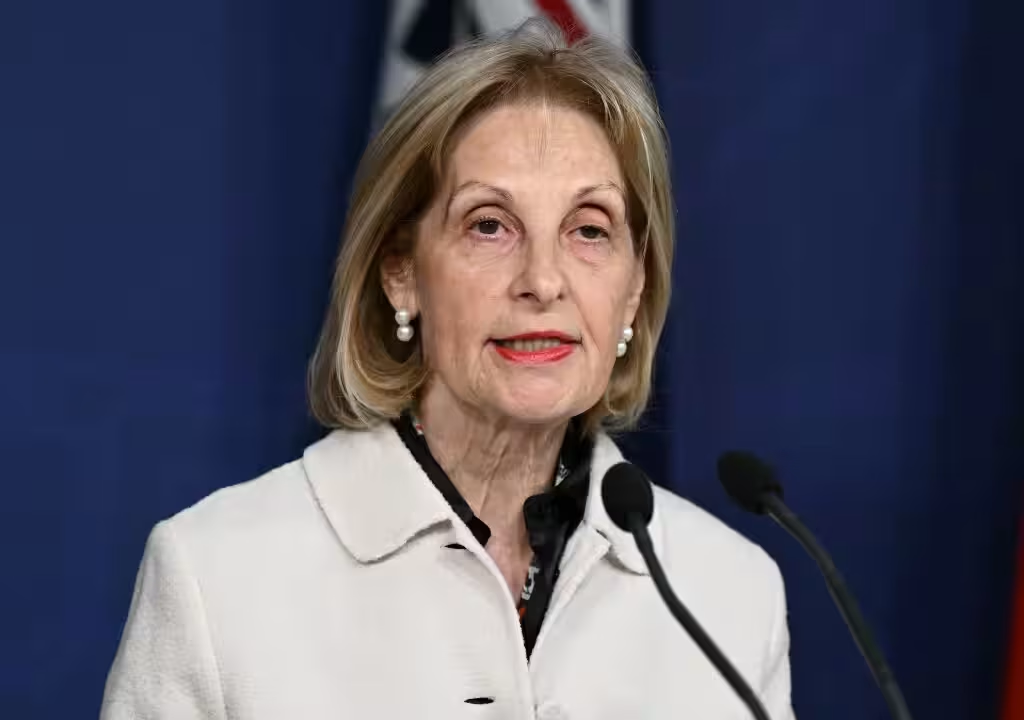
Australia cannot afford an anti-racism agenda that is selective, symbolic, or stalled. Our government must commit to the National Anti-Racism Framework now and ensure that cohesion means solidarity, not spin. This is a much needed foundation on which Australia can finally begin to mature as an anti-racist, democratic, nation – locally and globally.


Leave a Reply